SciVal Analytical Platform Introduced at UNEC for Metric-Based Evaluation of Scientific Activity
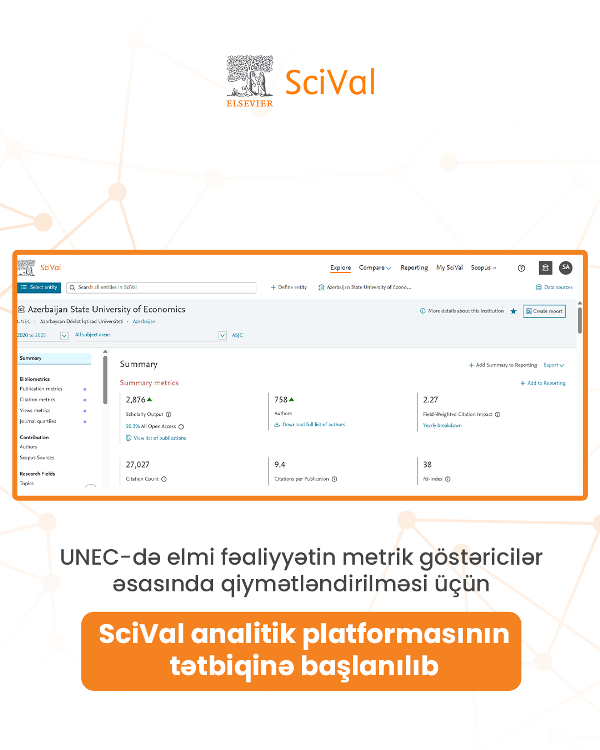
At the Azerbaijan State University of Economics (UNEC), the implementation of Elsevier’s SciVal analytical platform has commenced with the aim of evaluating scientific activity in line with international standards based on metric indicators and ensuring that strategic decisions are made on a sound scientific basis.
The SciVal system is built on data from the Scopus database and comprises five panels: Explore, Compare, Report, SciVal, and Scopus. The summary section of the Explore panel includes publication indicators, scientific contribution, research fields, rankings, collaboration, impact metrics, and funding sources. This panel serves to ensure measurable and transparent monitoring of UNEC’s scientific activity, to shape scientific policy and development strategy based on analytical data, to enhance the university’s international scientific reputation and visibility, and to improve the performance efficiency of researchers and structural units.
The tools within the Compare panel enable comparative analysis of the scientific performance of countries, universities, research institutions, and individual researchers across various metric indicators.
The Report section provides opportunities to prepare summary and analytical reports on UNEC’s or individual researchers’ scientific activity based on diverse indicators. In this panel, data are presented in the form of visual charts, tables, and comparative analyses.
The implementation of the SciVal platform enables an objective assessment of UNEC’s scientific activity within the context of international rankings, identification of the university’s strengths and weaknesses in the scientific domain, enhancement of the quality and impact level of research, analysis and expansion of international collaboration potential, as well as the adoption of evidence-based decisions in strategic planning and management.
The application of the SciVal analytical system at UNEC is regarded as an important step toward modernizing the university’s scientific management mechanisms and contributes to strengthening UNEC’s position in the global scientific landscape.
At subsequent stages, based on the functional capabilities of the SciVal platform, it is envisaged to identify UNEC’s priority research areas, conduct in-depth analytical analyses across structural units and individual researchers, and integrate the obtained results into scientific management and strategic decision-making processes. Further information on this topic will be presented to the public in upcoming releases.