UNEC Rector: “A Malaysian Perspective on Higher Education”
01 DECEMBER 2025 | VIEWS:
 UNEC Rector, Professor Adalat Muradov, undertook a working visit to Malaysia, during which he held meetings with leadership teams of the country’s leading higher education institutions, participated in the Higher Education Forum, and engaged in substantive discussions with education experts. The Rector shared his observations on Malaysia’s vision for the future of higher education on his official social media account as follows:
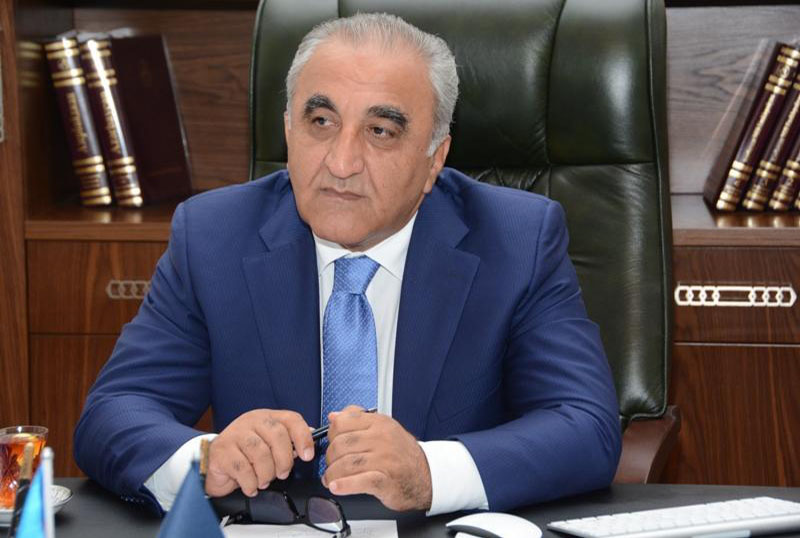
“A MALAYSIAN PERSPECTIVE ON HIGHER EDUCATION”
“The future of education, including higher education, remains a central concern for education specialists and institutional leaders worldwide. Extensive deliberations, new research initiatives, and international forums are being organised to address emerging challenges and opportunities. In this context, Malaysia is no exception. Our discussions at Malaysian universities and with distinguished experts revealed a number of noteworthy perspectives, which can be summarised as follows:
- Considerable attention is devoted to the future trajectory of universities in the post–digital transformation era. According to Malaysian experts, the discussion extends beyond pedagogical methods to the fundamental question of why universities should continue to exist in an age characterised by artificial intelligence and global mobility.
- Although universities have undergone modernisation over the past two decades, transitioning from traditional classrooms to LMS platforms, from chalkboards to smart boards, and from printed textbooks to chatbots, these changes are largely superficial. Without redefining the purpose and experience of learning, the digitalisation of an outdated model poses significant risks.
- Given that Artificial Intelligence can now deliver lectures, generate academic content, assess assignments, and offer personalised instruction, an important question arises: should universities remain institutions primarily responsible for knowledge transmission, or should they evolve into a fundamentally different type of establishment?
- It is imperative to understand not only how artificial intelligence and digital tools alter instructional formats, but also how they transform the identity, mission, and objectives of education itself.
- Artificial intelligence is highly capable but inherently non-human. It cannot impart empathy, integrity, humility, cultural literacy or moral values — qualities essential for responsible leadership and global citizenship.
- Artificial intelligence has the capacity to democratise education, yet it may also generate new forms of inequality, particularly for socio-economically disadvantaged learners, rural populations or individuals without adequate language support.
- Ensuring that education remains human-centred, inclusive, culturally meaningful and equitable in the age of artificial intelligence is one of the most widely discussed challenges.
- A frequently expressed view is that if artificial intelligence can efficiently manage knowledge transmission, the value of universities may increasingly lie not in the content they teach but in the kinds of societal challenges their students and researchers are equipped to solve.
- The university of the future may be defined less by its infrastructure, rankings or diplomas, and more by its measurable impact on society.
- The fifth-generation university model is a major subject of debate. There is broad consensus that, in the aftermath of digital transformation and the integration of artificial intelligence, universities must adopt mission-driven approaches, forming the conceptual foundation of the fifth-generation university.”