International Round Table on “Digital Economy and Innovative Education” Held at UNEC
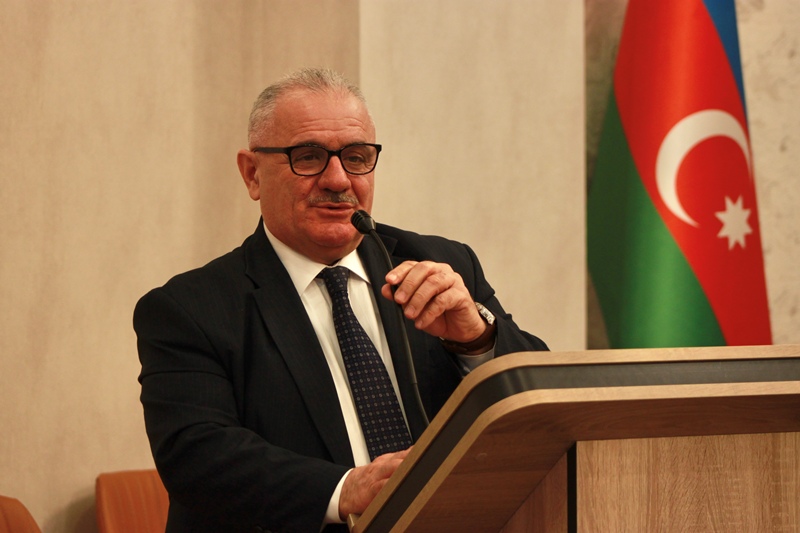
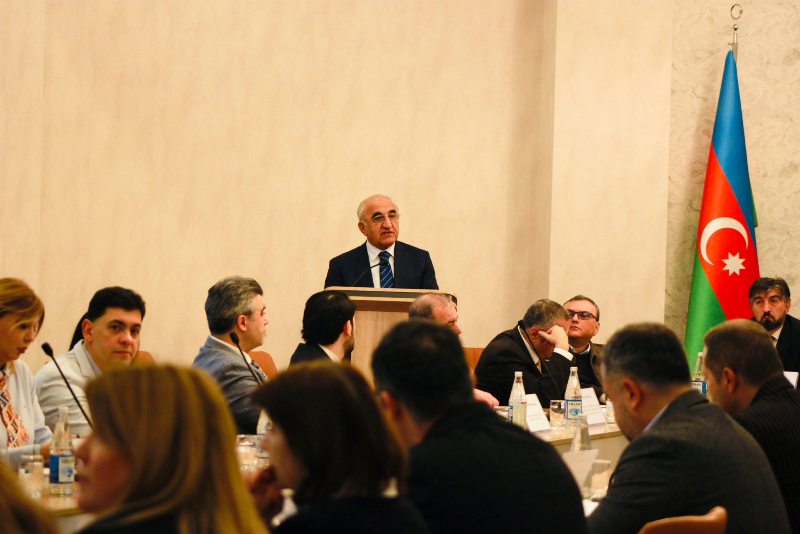
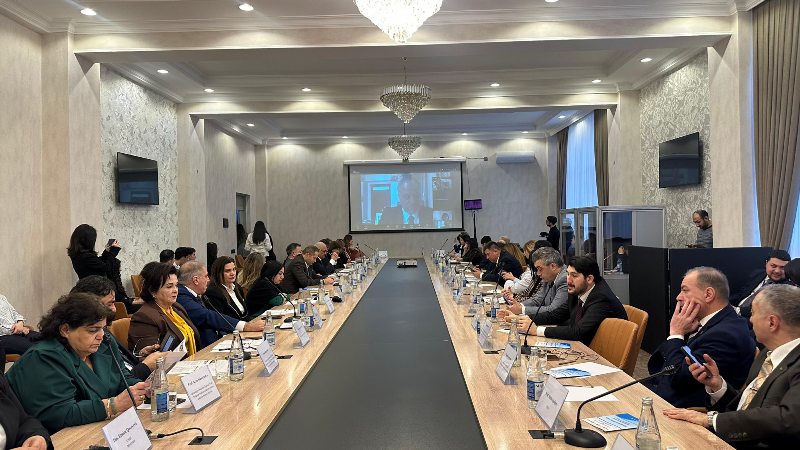
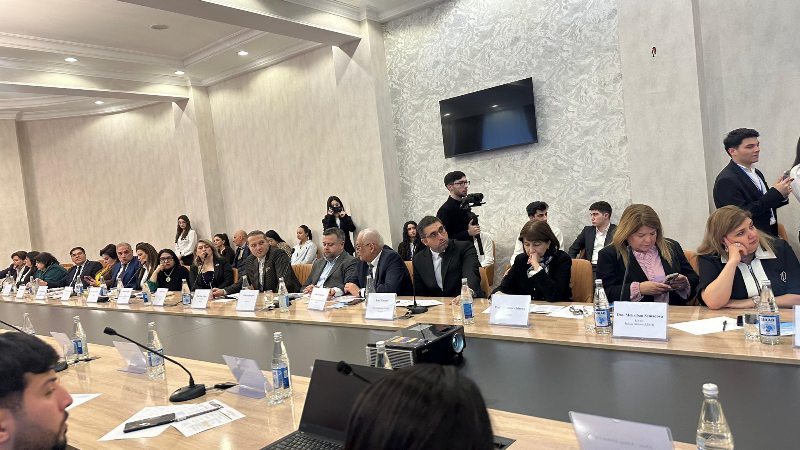
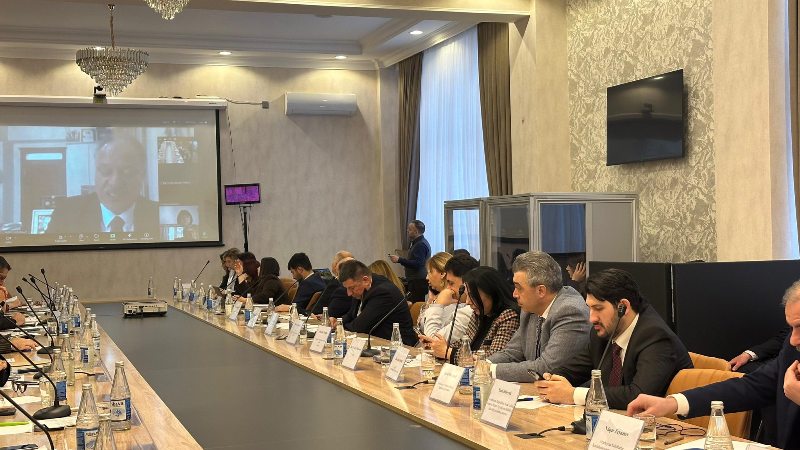
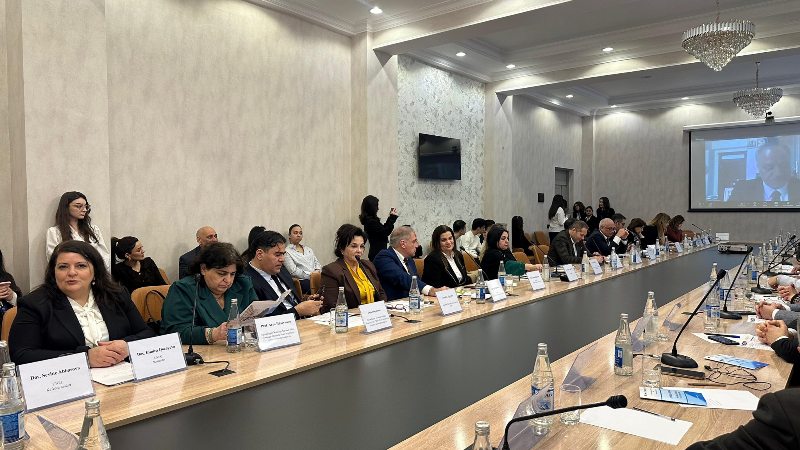
An international round table titled “Digital Economy and Innovative Education” was held at UNEC, organized by the Applied Economics Department of the Russian School of Economics.
The main objective of the event was to bring together experts in digital economy and innovative education within the context of global and Azerbaijani economic development, as well as to strengthen partnership relations between academic institutions and business organizations.
Scholars from Azerbaijan, Turkiye, Greece, Italy, Romania, Bulgaria, Kazakhstan, Uzbekistan, Moldova, Ukraine, and Georgia participated in the round table. The session addressed topical issues such as the development of the digital economy, digital transformation of education, the application of artificial intelligence in university teaching and management, cybersecurity in education, and the socio-economic impacts of digitalization.
At the opening of the round table, Associate Professor Mansur Barkhudarov, Director of the Russian School of Economics, noted that scholars and experts from 11 countries were taking part in the event. He emphasized that nearly 70 academic papers had been submitted and that the materials would be published in book form, wishing success to the proceedings.
In his address, UNEC Rector Professor Adalat Muradov spoke about the digitalization of university education, the integration of artificial intelligence into the teaching process, innovative education models, and the university’s future plans in this area. He highlighted that these approaches enable greater student engagement, stronger knowledge retention, and the development of independent learning skills “Artificial intelligence will accelerate the personalization of education and allow students to find answers to any questions related to lectures.”
The Rector also drew attention to the Minor programs introduced at the university to help students acquire additional skills: “Alongside their main academic programs, our students can obtain additional micro-qualifications, which expands opportunities for lifelong learning and personal development. The MINOR program implemented at UNEC allows students to gain supplementary competencies in various disciplines and receive certificates. In addition, graduates of our long-standing Internal Dual Degree Program earn two bachelor’s degrees in two different specializations. To date, 15 students have graduated from this program, and 42 students are currently enrolled.”
Speaking about the core mission of higher education, the Rector stated: “The mission of universities is not merely to train specialists according to labor market demands; we must educate thoughtful, responsible individuals who are committed to national values.”
Professor Muradov also emphasized Azerbaijan’s competitive advantages: “In terms of traditional and national values, the Azerbaijani people are competitive. By leveraging these strengths, we will successfully integrate innovations into our education system. I am confident that UNEC will take its rightful place in the new configuration of education.”
The international round table continued with academic presentations.
Associate Professor Mansur Barkhudarov, Dean of the Russian School of Economics, delivered a presentation on Digital Entrepreneurship in the Context of Science and Education. Professor Kerem Karabulut, Dean of the Faculty of Economics and Administrative Sciences at Atatürk University (Turkiye), spoke on Turkiye and Azerbaijan in the 21st Century: Economy and Education. Vugar Zeynalov, Vice-President of the National Confederation of Entrepreneurs’ Organizations of Azerbaijan, presented on Entrepreneurship Education and the Development of Business Structures. Associate Professor Nadejda Kostadinova from Veliko Tarnovo University (Bulgaria) discussed Tourism in the Digital Age: New Professions and Skills. Professor Sergey Antonovich Okhrimenko from the Academy of Economic Studies of Moldova addressed The Shadow Aspects of Digitalization Processes. Professor Nino Papacashvili, Director of the Institute of Progressive Studies (Georgia), presented Education Technologies in the Context of the Co-development of Industry 4.0 and 5.0. Fuad Gasimov, Head of UNEC’s Lifelong Learning Center, spoke on The Role of Artificial Intelligence and Digital Technologies in Transforming Education and Management Systems. Professor Guido Migliaccio from the University of Sannio (Italy) delivered a presentation titled Business Efficiency in the Digital Economy: An International Comparison between Estonia, Germany, and Spain.
In the second part of the event, presentations were delivered by Dr. Evangelos Siskos from the University of Western Macedonia (Greece) on Innovative Education: European Experience; Professor Raya Karlibayeva from Tashkent State University of Economics on Innovative Education as a Driver of Digital Economy Development; Dr. Sabrina Lucilla Barone from Pegaso Telematic University (Italy) on Hybrid Education Models and Sustainable University Teaching; Professor Tatyana Gutyum from the National Institute for Economic Research of Moldova on The Role of Digitalization in Assessing Energy Vulnerability in Moldova; and Tatyana Kalinesku, representative of the National Aerospace University of Kharkiv (Ukraine), on Improving the Social Insurance Information System in the Context of Ukraine’s Modern Development.
Following the presentations, a general discussion was held and proposals were voiced. It was emphasized that the implementation of digitalization, artificial intelligence, and innovative education models plays a crucial role in fostering students’ individual development, enhancing the quality of higher education, and strengthening international cooperation.