Teaching System Updated at UNEC School of Design: PBL Model to Be Implemented
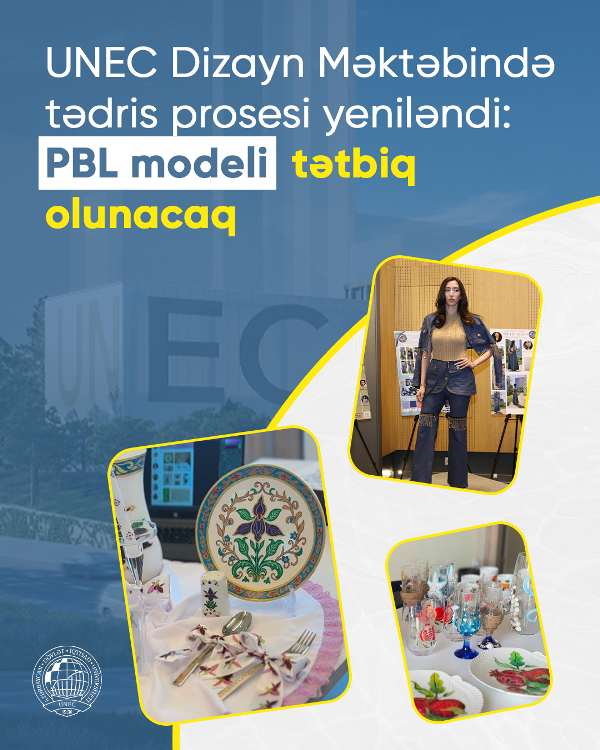
Starting from the spring semester, the educational process at the UNEC School of Design will be organized according to the PBL (Project-Based Learning) model. This approach, which was previously introduced as a pilot project and demonstrated successful outcomes, will now be extended to cover the entire teaching and learning process.
In line with the new model, the traditional teacher-centered, subject-based, and exam-oriented assessment system will be replaced with a student-centered, project-based structure. Assessment will primarily be conducted based on the projects students develop throughout the semester, the portfolios they compile, and the prototypes they present.
Within the PBL framework, students will acquire theoretical knowledge not through isolated subjects, but by working on real-world problems and practical tasks. The learning process will be built around teamwork, research, analysis, and practical application. This model will not only enhance students’ critical and creative thinking skills but also strengthen their competencies in problem solving, presentation, and collaboration.
The new approach implemented at the UNEC School of Design represents a comprehensive transformation in both the content and objectives of education. The Project-Based Learning model enables students to graduate with a strong and competitive professional portfolio. By bringing the learning process closer to real working environments, it develops their ability to analyze situations in depth, identify real needs, and propose creative, well-grounded solutions tailored to those needs. As a result, graduates enter the labor market better prepared, equipped with practical experience, and capable of flexible, innovative thinking.